
Electrical Fault Finding: Top Signs and Quick Fixes
Summer in Cape Town is magic: braais on the balcony, fairy lights twinkling against Table Mountain, air conditioners humming 24/7, and the kids home streaming series while the pool pump runs non-stop. It’s also the month when your electrical system quietly screams for mercy.
If you’ve ever had the lights flicker right as the roast goes into the oven or the breaker trip the second the fairy lights plugs in, you’re not alone. Summer heat and higher electrical loads create the perfect storm for electrical faults across the Mother City. One small overlooked fault can turn summer fun into chaos – fast.
This guide walks you through the most common electrical headaches Cape Town homeowners and businesses face right now, the scary consequences of ignoring them, and exactly what professional electrical fault finding looks like in 2026. Let’s keep your summer bright – safely.
Your Home or Business is One Overloaded Plug Away from a Festive Blackout
Cape Town properties, especially in older suburbs like Observatory, Rondebosch, Sea Point and the Southern Suburbs, were simply not built for today’s electrical appetite. Add December’s triple threat – scorching temperatures, extra decorative lighting and non-stop appliances – and even newer builds start showing cracks.
The most common culprits we see as an electrical contractor in Cape Town this time of year:
- Air conditioners and fans pulling maximum power in 35 °C heat
- Fairy lights, inflatables and outdoor projectors running for weeks
- Extra fridges and freezers stocked for parties
- Guests charging phones, laptops and e-scooters in every available socket
- Load shedding surges when power returns
These push circuits past their limits, and the first warning sign is usually an electrical fault that seems “minor” – until it isn’t.
What Happens When You Ignore Those Little Warning Signs?
We’ve all been guilty of resetting the breaker “just one more time” or wiggling a loose plug and hoping for the best. Here’s what that decision can cost you in a Cape Town summer:
- Fire Risk Skyrockets
Dry heat + overloaded wiring + sparks = the recipe for an electrical fire. The City of Cape Town Fire & Rescue Service reports a noticeable spike in electrical fires every December and January. - Expensive Appliance Casualties
One unnoticed surge can fry your TV, fridge compressor or pool heat pump. Replacement costs run into the tens of thousands. - Total Blackout During Load Shedding Recovery
When Eskom restores power after Stage 4 or 6, the inrush current can trip already-weakened circuits permanently. Suddenly your home is darker than the scheduled blackout. - Summer Plans Ruined
Imagine 20 friends arriving for a dinner party and the oven, stove and air conditioner all dead. Or your restaurant in Camps Bay losing power on a hot summer night. - Insurance Complications
Many policies require proof of regular maintenance and a valid Certificate of Compliance. An unreported electrical fault can void your claim.
The good news? Almost all of these disasters are preventable with timely, professional electrical fault finding.
How Professional Electrical Fault Finding Works in 2026
Modern electrical fault finding is part science, part detective work. Here’s the step-by-step process a qualified electrical contractor in Cape Town follows to keep you safe this summer:
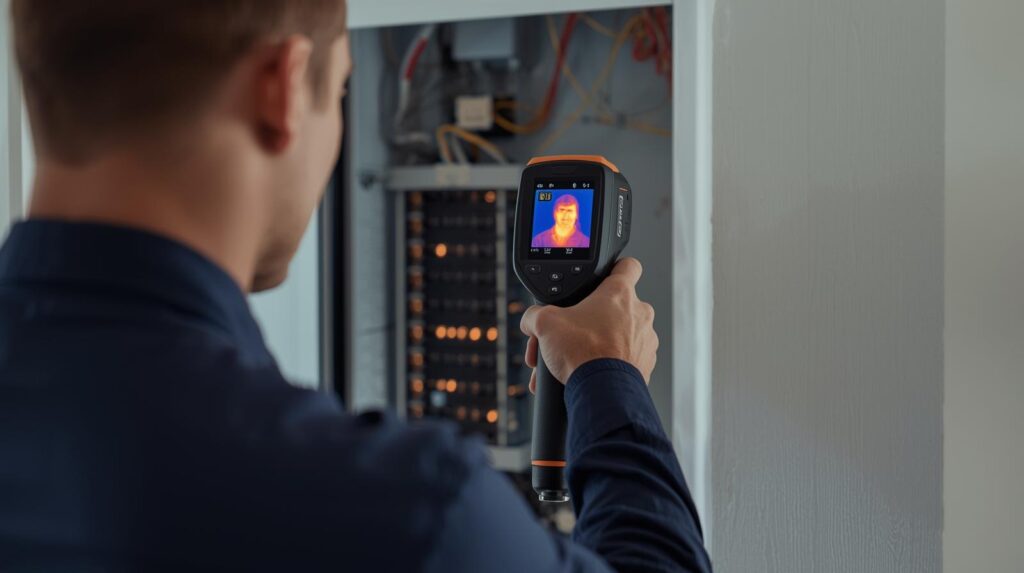
Step 1 – Visual and Thermal Inspection
We start with a full walk-through using thermal imaging cameras to spot hot joints, overloaded cables and loose connections that the naked eye can’t see. In summer, these hot spots glow like beacons.
Step 2 – Load Calculation and Circuit Mapping
We measure exactly what each circuit is carrying right now (air con + tree lights + pool pump = surprise!). Then we compare it to what the circuit was designed for decades ago.
Step 3 – Advanced Testing
- Insulation resistance testing
- Earth loop impedance checks
- RCD trip-time verification
- Continuity tests on all decorative lighting circuits
Step 4 – Root-Cause Diagnosis
Is the fault a loose connection, undersized cable, faulty breaker, water ingress from summer rain, or pest damage? We pinpoint it 100 % before touching a screwdriver.
Step 5 – Safe, Compliant Repairs or Upgrades
Only then do we repair or upgrade – always to the latest SANS 10142-1 standards – and issue or update your Certificate of Compliance.
Top 7 Electrical Fault Signs Cape Town Homes Show Every December (And What They Really Mean)
- Flickering lights when the air conditioner kicks in
→ Circuit overload or loose neutral.
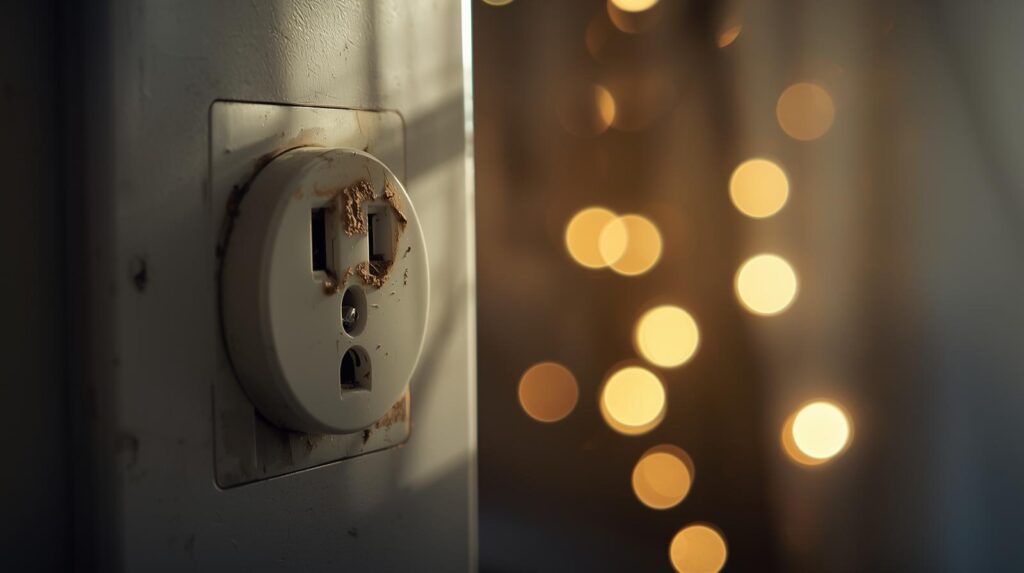
- Warm or discoloured plug points
→ Dangerous loose connection creating resistance heat. - Frequent tripping of one specific breaker
→ That circuit is overloaded or has a partial earth leakage. - Burning plastic smell (even faint)
→ Stop everything and call an electrical fault finder immediately. - Buzzing or crackling sounds from the DB board
→ Arcing fault inside the board – high fire risk.
- Some plugs work, others in the same room don’t
→ Broken ring circuit or failed joint common in older homes. - Lights brighten dramatically when load shedding ends
→ Missing or failed surge protection.
Quick DIY Checks You Can Do Today (And When to Phone the Pros)
While only a registered electrical contractor can legally perform repairs, these safe checks can buy you peace of mind:
- Spread decorative lights across multiple circuits
- Unplug appliances you’re not using
- Feel every plug point for warmth after two hours of load
- Count how many high-wattage items share one breaker
- Test your surge plugs – they do wear out
If anything feels off, switch off at the DB and call a professional electrical fault finder the same day.
Why Cape Town’s Summer Weather Makes Everything Worse
Heat causes copper cables to expand. Expansion loosens old connections. Loose connections create heat. It’s a vicious cycle that accelerates in summer’s 30–40 °C days. Add Atlantic seaboard wind driving dust into outdoor DB boxes and you’ve got a recipe for rapid deterioration.
How ElectroGem Approaches Electrical Fault Finding Differently
As a local electrical contractor in Cape Town, we’ve responded to hundreds of December emergency calls. Our teams carry the latest diagnostic tools and spare parts for the most common summer failures, meaning most faults are resolved in a single visit.

Peace of Mind is the Best Way to Start 2026
This summer, give yourself (and your family) the gift of knowing your electrical system won’t let you down. A single professional electrical fault finding visit now can prevent disaster later – and let you focus on what really matters: good food, great company and making memories under Cape Town’s starlit summer sky.
Stay safe, stay bright, and have a shock-free summer.
Frequently Asked Questions
- How quickly can an electrical fault finder get to me in Cape Town?
Reputable electrical contractors in Cape Town prioritise emergencies 24/7. Same-day or next-day response is standard for safety-critical faults. - Is it safe to keep using an outlet that feels warm?
No. A warm plug is already in the early stages of failure and poses a fire risk. Unplug everything and call an electrical contractor immediately. - Will decorative fairy lights overload my circuits?
LED lights draw very little power, but older incandescent strings plus inflatables and projectors can easily push a circuit over the edge. Spread them across multiple circuits. - Do I need surge protection if I already have a generator or inverter?
Yes. Generators and inverters protect against blackouts, not the massive voltage spikes when grid power returns after load shedding. - How often should I have electrical fault finding done on my Cape Town property?
Every 2–3 years for homes, annually for businesses, and always before the high-load summer festive period or when selling (for COC purposes).
Discover how proper electrical installations beat scams, overloads and fires this summer. Read our recent article here…