
Cape Town’s spring brings longer days and rising solar irradiance after winter’s shorter, cloudier periods. Home and business owners with a solar pv system often expect a clear jump in generation, yet many see only modest gains or even new problems. The specific challenge is underperformance or emerging faults that appear as sunlight increases: panels dirty from winter rain residue and pollen, suboptimal tilt or orientation from the original photovoltaic panels installation, loose connections that only show under higher current, or inverter issues that surface when production climbs.
Leaving this unsolved carries real costs. Reduced yield means higher reliance on grid power precisely when spring outdoor activities and longer days raise overall consumption. Minor connection faults can escalate into inverter shutdowns or component stress. Non-compliant or poorly maintained systems risk failing future inspections or voiding warranties. In coastal or windy areas, unaddressed mounting wear can become structural. For businesses, the shortfall hits operating costs during peak spring event periods.
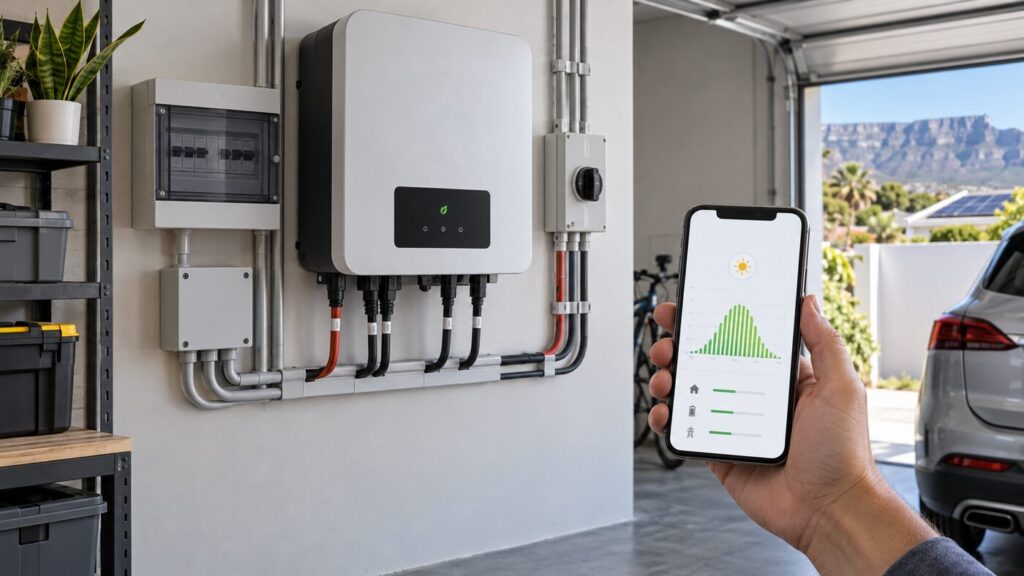
A clear approach starts with a systematic review rather than waiting for summer heat. First, confirm the original photovoltaic panels installation matched the site’s latitude and shading. Ask the installer to explain the orientation and tilt chosen for your roof, and whether shading has changed since the system went in. Clean panels carefully (soft water, no abrasives) to remove residual winter film and spring pollen.
Inspect mounting hardware for corrosion or looseness, especially near the coast. Monitor inverter logs for error codes or thermal derating as production rises. Ask a qualified person to check the earthing and surge protection. Finally, compare actual output against expected spring irradiance for the system size. These steps often reveal simple fixes and establish a baseline before hotter months.
A qualified local team fits naturally into this process by performing the measurements, confirming SANS 10142-1 and relevant grid-connection standards, correcting any installation shortfalls, and documenting the work. They bring the test equipment and experience with Cape Town conditions so the solar pv system delivers reliable spring gains without introducing new risks.
Why spring is a good moment to check a solar PV system
Spring in Cape Town brings longer days and more sunshine, so it is a natural time to see whether a solar PV system is doing what it should. If the numbers on your monitoring app or electricity bill have not improved as the days lengthen, something may be holding the system back. The cause can be as simple as dirt on the panels or as important as a loose connection, and the only way to know is to look.
A seasonal check also gives you a baseline. When you know what your system produces on a clear spring day, you can compare it with summer output and spot a decline early. Write down the date, the weather and the daily generation figure from your inverter or app. A few readings are far more useful to an electrician than a general feeling that the system seems low.
What affects solar PV output on a Cape Town roof
Several factors work together to decide how much electricity a solar PV system produces. Shading is one of the biggest. A branch, a chimney, a neighbouring building or even a vent pipe can cast a shadow across part of a panel, and because panels in a string are connected together, a shaded panel can reduce the output of the others. Shadows move through the day and through the year, so a spot that is sunny in winter can be shaded in spring or the other way round.
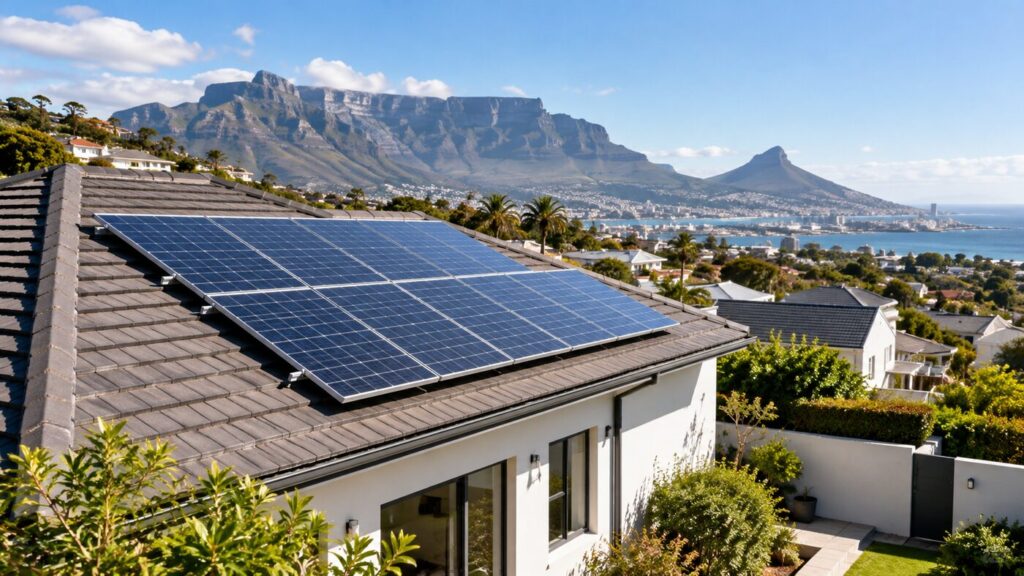
Dirt matters too. Dust, pollen, bird droppings and a film left by winter rain can reduce the light reaching the cells. Panel angle and direction also play a part. In the southern hemisphere panels generally face north to catch the most sun, but the best layout depends on the roof, so an installer should explain why your panels are set the way they are.
Heat and ventilation affect performance as well. Panels and inverters work best when air can move around them. An inverter in a hot, enclosed space may reduce its output to protect itself, and your installer can tell you what the manufacturer recommends for your model.
Simple checks an owner can do safely
There is a clear line between what an owner can look at and what only a qualified person should touch. From the ground, you can look at your panels for obvious dirt, cracked glass, loose or hanging cables, and anything growing or leaning over them. Check your inverter display or app for error messages and write down any codes. Note whether the system has stopped producing at certain times of day, which can point to shading.
Do not climb onto the roof or open the inverter, the distribution board or any junction box to investigate. Solar panels produce electricity whenever there is light, so working near the wiring carries a shock risk even when the grid is switched off. If you want the panels cleaned, ask your installer for advice first, because the wrong method or a slip on the roof can cause damage or injury.
Cleaning and inspection by a professional
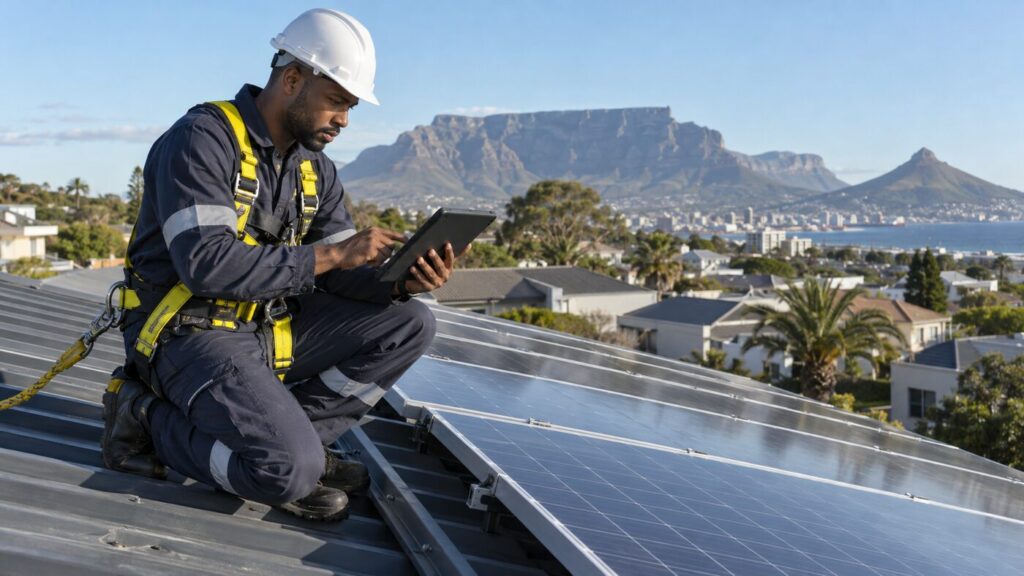
A qualified solar technician can clean the panels with suitable methods, check mounting hardware for corrosion or movement, inspect cable routes and connectors, and read the inverter logs. Coastal and windy conditions can be hard on fixings, so it is sensible to ask for the mounting points to be checked. The technician can also compare your system’s output with what the design predicts, which helps show whether a low reading is a real fault or just a cloudy week.
A good technician will explain what they found in plain language, show you any damage, and tell you what is urgent and what can wait. Ask for a written note of the work done, the readings taken and any recommendations, and keep it with your system documents.
Approval, compliance and paperwork in the City of Cape Town
If you are adding or changing a solar PV or battery system in the City of Cape Town electricity supply area, the City requires you to apply for authorisation. According to the City, all new solar PV and battery systems are treated as grid-tied, which means they must use City-approved inverters, have professional sign-off and be authorised before they are switched on.
The City also says that unauthorised systems must be authorised or decommissioned and that a service fee can apply. Applications are made online through the City’s e-Services platform, and the City’s Going solar and embedded generation pages explain the current process, so check them or ask your installer before work starts.
Solar work is also electrical installation work. Under the Electrical Installation Regulations, 2009, a registered person must inspect and test an electrical installation and issue a certificate of compliance, and only a registered person may issue one. The regulations also say that where an addition or alteration is made to an installation, the user or lessor must obtain a certificate of compliance for at least that addition or alteration. Ask any installer you consider for their registration details and for the certificate of compliance when the job is done.
Questions to ask a solar installer
Good questions make it easier to compare installers and avoid problems later. Ask whether they are registered under the Electrical Installation Regulations and whether they will issue a certificate of compliance. Ask whether they will handle the City of Cape Town authorisation and whether the inverter on the quote is on the City’s approved list. Ask what monitoring you will have, what the warranty covers, who to call when something goes wrong, and how the panels and mounting will be checked over time.
Ask how the system will be earthed and protected against surges, and who is responsible for documenting the design and test results. A clear answer, given in writing, is a good sign. Vague answers or pressure to skip approval or paperwork are a reason to slow down and get another quote.
When to call a professional straight away
Call a qualified electrician or solar technician promptly if you see burn marks, a burning smell, crackling sounds, melted plastic, cables that are damaged or exposed, water inside the inverter or a distribution board, or an inverter that keeps tripping or shutting down. If you suspect an electrical fire, leave the building and call the emergency services. These signs can point to faults that become dangerous, and they are not a job for a do-it-yourself fix.
A planned spring check is a calmer way to catch many problems. It lets a professional deal with wear, loose connections and gaps in documentation before summer, when the system is working hardest.
FAQs
Why might my solar pv system produce less than expected in spring?
Residual soiling, suboptimal tilt from the original photovoltaic panels installation, partial shading that only appears with lower sun angles, or connection issues that become noticeable under higher current are common.
How often should photovoltaic panels installation components be checked?
Have a qualified person do a visual and electrical check at regular intervals, agreed with your installer and based on the manufacturer’s guidance. Ask them before cleaning the panels yourself.
Does spring weather affect solar system installation quality?
Milder conditions make it a practical time for safe work and testing before summer winds and heat.
Can existing panels be optimised without full replacement?
Often yes: cleaning, connection tightening, angle adjustment where feasible, and inverter or string checks resolve many underperformance cases.
What standards apply to solar work in Cape Town?
SANS 10142-1 covers the wiring of electrical installations. In the City of Cape Town, new solar PV and battery systems also need City authorisation before they are switched on, and a registered person must inspect, test and issue a certificate of compliance.
Related reading
Related reading: Why Mid-Spring Is the Best Time to Install a Solar PV System and 5 Biggest Mistakes to Avoid When Installing a Solar PV System in Cape Town.
Solar work is also electrical installation work. For the rules behind registered electrical work and certificates of compliance, see the Electrical Installation Regulations, 2009 from the Department of Employment and Labour. A registered electrician should confirm what applies to your property.