
Spring and early summer are the busiest months on Cape Town’s property calendar. Boards go up across the Southern Suburbs, transfers pile onto conveyancers’ desks, and sellers scramble to gather the compliance certificates a sale depends on. The electrical certificate of compliance, usually just called a CoC, is the one that catches people out most often. Not because it is complicated, but because it is left until the week before transfer.
If you are selling, or even just thinking about it, here is what the certificate actually is, what the law expects, and how to get it done without holding up your sale.
What a certificate of compliance actually is
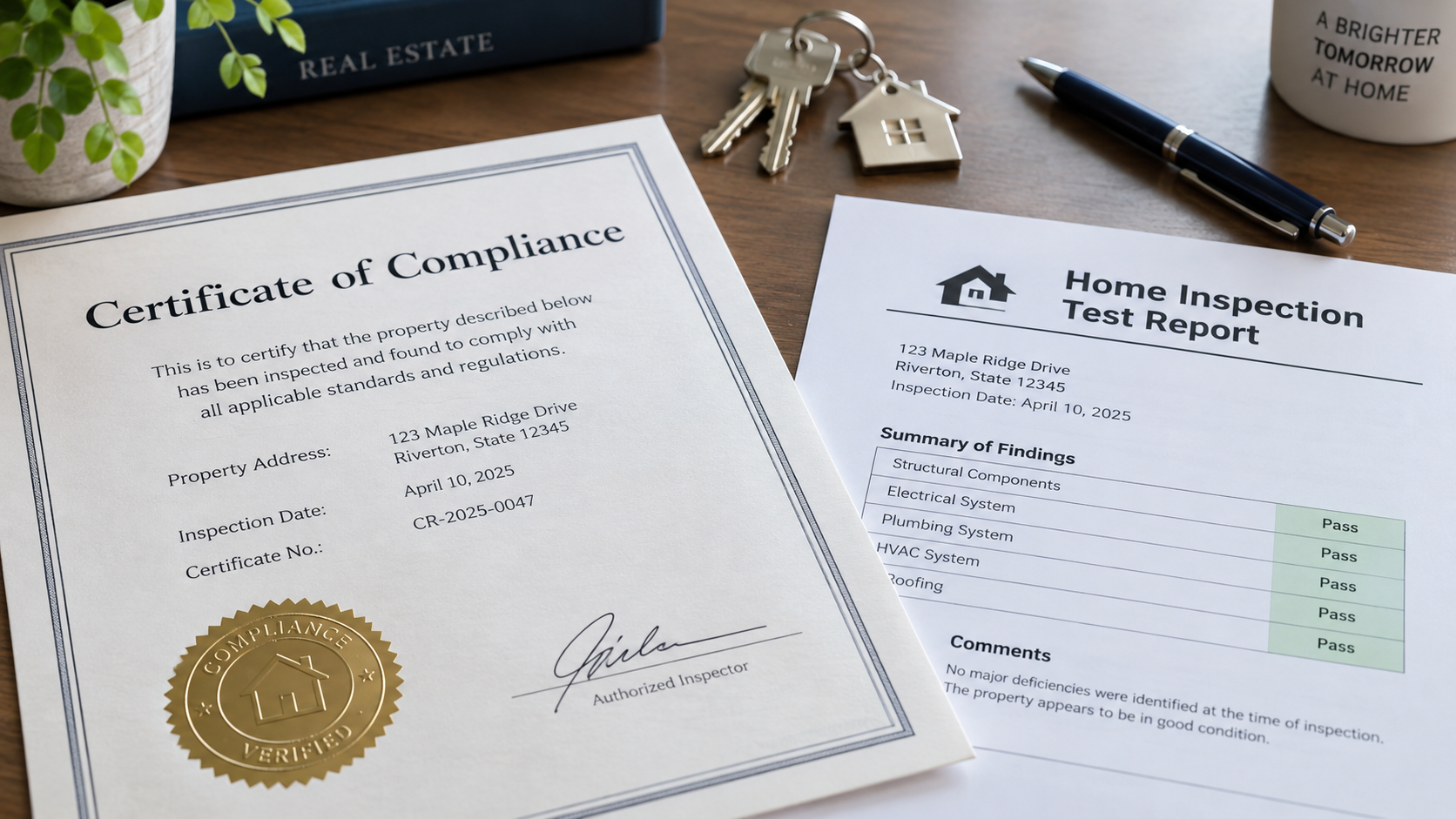
A CoC is a formal document confirming that an electrical installation has been inspected and tested, and that it meets the legal requirements. It comes with a test report recording the actual measurements taken on your installation, things like insulation resistance and earth continuity. It is not a general thumbs-up for the house, and it is not a warranty. It is a statement, signed by a specific registered person, that the fixed electrical installation was compliant on the day it was tested.
The legal backbone is the Electrical Installation Regulations, 2009, made under the Occupational Health and Safety Act. Two points matter most for sellers. Regulation 6 requires that anyone doing electrical installation work as an electrical contractor must be registered as one. Regulation 9 is the one that puts the certificate in the hands of a registered person: only a registered person may issue a certificate of compliance, after inspecting and testing the installation. Your cousin who is “good with wires” cannot sign one, no matter how tidy his work is.
Why the sale depends on it
The regulations tie the certificate directly to property transfers. A user or lessor may not allow a change of ownership where the certificate of compliance is older than two years. In practice, that means every sale needs a certificate that is current, and conveyancers will ask for it as part of the transfer documents. No certificate, no transfer, or at best a transfer stalled while everyone waits.
The consequences of leaving it late are predictable. The inspection finds defects, which is normal, especially in older Plumstead, Wynberg or Bergvliet homes where decades of alterations hide behind ceilings. Remedial work takes time to quote and complete. Bond attorneys and transferring attorneys keep asking. The buyer gets nervous. A certificate that could have been sorted in a fortnight during August becomes the thing holding up a November registration.
There is also a protection angle worth understanding. The CoC protects the buyer from inheriting a dangerous installation, but it protects you as the seller too. Once the installation is certified and transferred, you have a defensible record of its condition at handover.
What the inspection covers, and what it does not
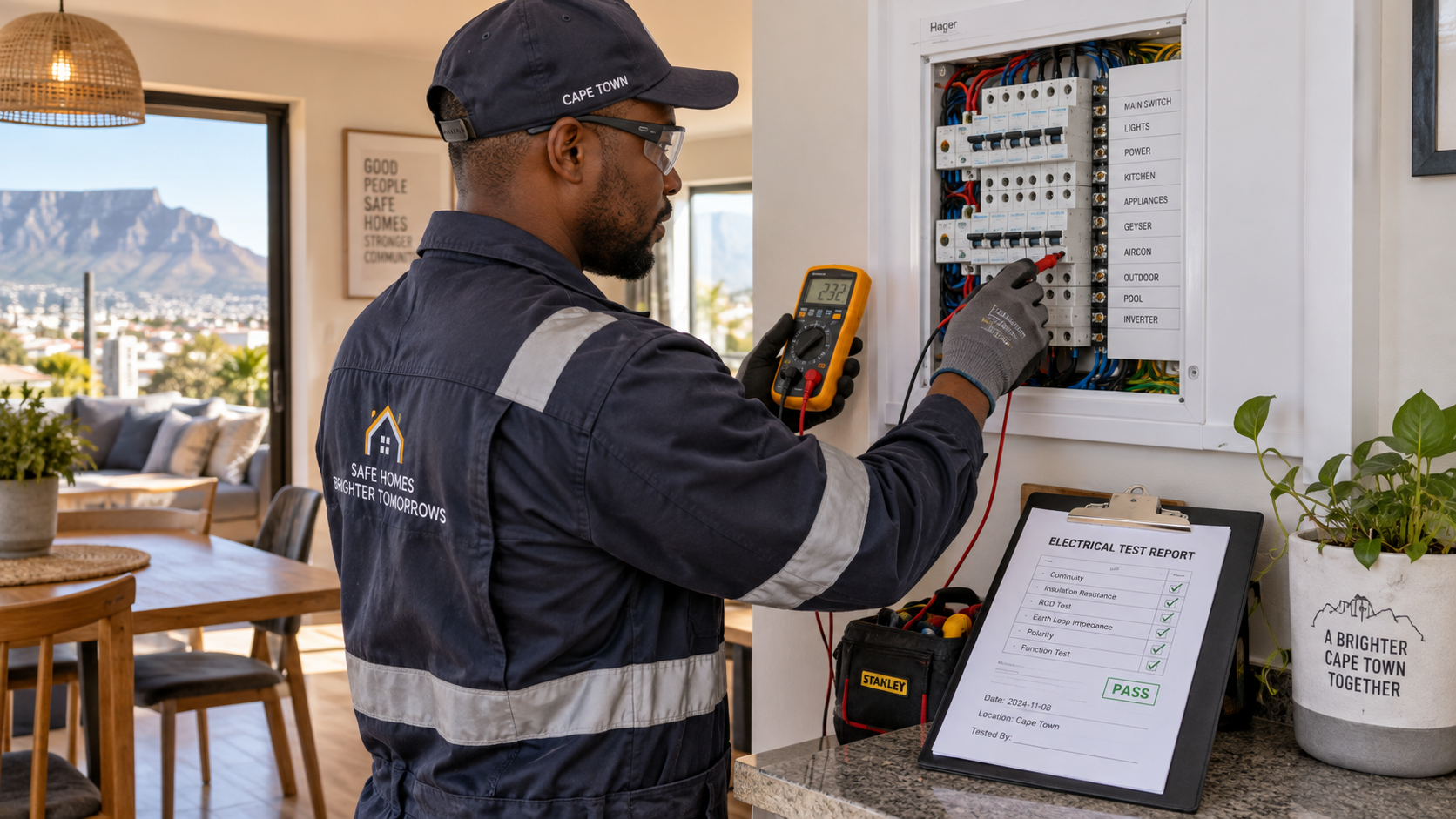
Sellers are often surprised by how specific the inspection is. The registered person works through the fixed installation: the distribution board and its breakers, the main switch, earthing and bonding, the condition of fixed wiring, socket outlets and light points, fixed appliances such as stoves and geysers, and the all-important earth leakage protection. They verify that protective devices actually trip when tested and that the installation matches the requirements of the wiring code, SANS 10142-1.
Just as important is what falls outside the certificate. Plug-in appliances are not covered. Neither is the kettle, the tumble dryer or the buyer’s future home theatre. The CoC deals with the fixed electrical installation only. And it certifies compliance, not quality of finish or whether the geyser is energy efficient.
The defects that most often fail Cape Town homes
After a wet winter, certain problems turn up again and again during pre-sale inspections. Earth leakage units that do not trip on test, or that are missing on circuits that need them. Bonding that has corroded or was never connected, particularly on older plumbing. Distribution boards with unlabelled circuits, scorched connections or a decade of DIY additions squeezed in. Garden and pool wiring with fittings that were never rated for outdoor use, degraded by sun and salt air in coastal suburbs from Muizenberg to Blouberg.
None of this means your sale is in trouble. It means the installation needs attention before it can be certified, which is exactly what the process is for. A reputable electrical contractor in Cape Town will inspect, give you a written list of what fails and why, quote for the remedial work, and only then issue the certificate once the installation genuinely passes.
Choosing who does the work
This is where sellers need to be careful, because the cheapest certificate can become the most expensive. The Department of Employment and Labour has warned the public about unregistered operators issuing worthless paperwork. Only the Department issues registration letters to electrical contractors, and you can verify a contractor’s registration with it before any work begins (see the Department of Employment and Labour). Ask for registration details up front, ask who the registered person signing your certificate will be, and be wary of anyone offering a certificate without setting foot on the property. A certificate issued without a proper inspection is not worth the paper it is printed on, and it can unravel a transfer when a buyer’s electrician looks twice.
Timing matters as much as the choice of contractor. Book the inspection early in the sales process, ideally before the house even goes on show. That gives you room to fix defects calmly, shop for fair remedial quotes, and hand the conveyancer a clean certificate long before transfer day. You will find more guidance on vetting contractors in our post on choosing a reliable electrical contractor in Cape Town.
How Electrogem handles a pre-sale certificate
Electrogem’s registered team in Plumstead handles CoC inspections for sellers across the Southern Suburbs and greater Cape Town every week, and the process is deliberately straightforward. An inspection of the full fixed installation, a plain-language report of anything that fails, a written quote for remedial work where needed, and then the certificate and test report once the installation passes. If your electrical installations are already in good shape, you get the paperwork quickly and the sale moves on. If work is needed, you know exactly what and why before anyone picks up a tool.
It is not only sellers who need one
The regulations put the same duty on lessors, which catches landlords off guard. If you rent out a property, you must hold a valid certificate of compliance with its test report for the installation. Holiday lets heading into the December rush are not exempt, and neither is the flatlet behind the house. When a tenant moves in and something electrical goes wrong, the first question anyone asks is whether a valid certificate exists. Body corporates and managing agents increasingly ask for it too, particularly when sectional title units change hands or when insurance claims involve electrical damage.
Buyers should treat the certificate the same way. Ask for it during the offer stage rather than after the bond is approved, look at the date and the test report, and check that any recent renovation, a new kitchen circuit, a geyser replacement, has its own paperwork. A seller who renovated without certifying the additions is handing you a problem with a bow on it.

What to expect on the day
A proper inspection of a typical three-bedroom home takes a couple of hours, longer where there are outbuildings, a pool or a history of alterations. The registered person will need access to the distribution board, the roof space, the geyser and every room, and the power will go off for parts of the testing. You do not need to prepare anything beyond access, but having old certificates and previous test reports on hand helps the electrician understand the installation’s history.
Afterwards you should get two things: clear feedback on anything that failed, and paperwork you can actually file. If all you receive is a one-page certificate with no test report and no explanation, ask questions. The test report is part of what the regulations require, and it is the part that tells the next electrician what was actually measured.
After the certificate: keeping it valid
Once issued, keep the certificate and test report with your property documents. If you alter or extend the installation later, remember that the regulations require a certificate for at least the addition or alteration as well. And if you are the buyer reading this from the other side of the table, ask for the certificate early, read the test report, and do not be shy about asking who the registered person was.
FAQs
1. Who is allowed to issue an electrical certificate of compliance?
Only a registered person may issue a CoC. Under regulation 9 of the Electrical Installation Regulations, 2009, the certificate is issued by a registered person after inspecting and testing the installation, and regulation 6 requires electrical contractors doing installation work to be registered.
2. How long is a certificate of compliance valid when selling a house?
For transfer purposes, the regulations do not allow a change of ownership where the certificate is older than two years. Any alteration or addition after certification needs its own certificate covering at least that work.
3. What happens if my home fails the inspection?
You get a list of the defects, a quote for the remedial work, and the certificate is issued once the installation passes. Failing first time is common in older Cape Town homes and is not a crisis if you start early.
4. Does the certificate cover my appliances?
No. The CoC covers the fixed electrical installation only, meaning wiring, the distribution board, earthing, sockets, lights and fixed appliances such as the geyser and stove. Plug-in appliances are excluded.
5. Can I use the same certificate if I sold my house years ago?
No. Each change of ownership needs a certificate that is less than two years old, and any electrical work done since the last certificate must also be certified. Budget for a fresh inspection when you sell.
If the inspection turns up work that needs doing, our post on professional electrical wiring for safe spring upgrades in Cape Town explains how certified upgrade work is carried out from quote to certificate.