
Even where storms are less frequent, risk remains during transitional spring weather when frontal systems or unstable air can produce storms. The specific challenge many owners face is incomplete or degraded lightning protection and earthing: high earth resistance from older electrodes, missing or failed surge devices at the main board, unbonded solar frames or outdoor metalwork, and corrosion on coastal or humid sites that weakens the path to ground.
Unaddressed gaps create urgency. A single surge, whether from distant lightning or grid switching, can damage inverters, electronics, or control systems. High earth resistance can slow fault clearance, which raises shock and fire risk. For businesses running critical equipment or outdoor events, downtime and insurance complications may follow.

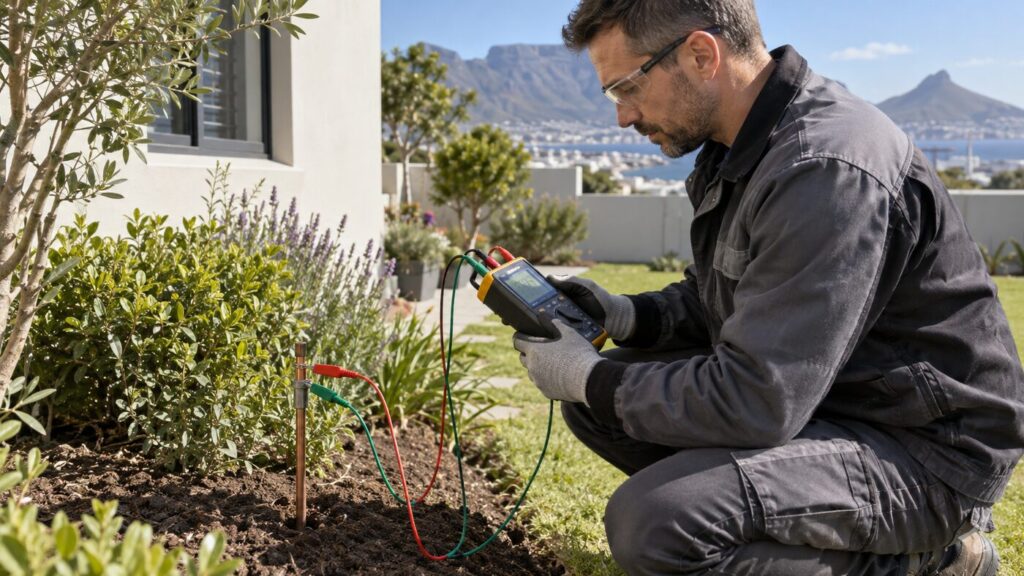
The solution framework is straightforward and standards-based. Have a qualified person measure the earth electrode resistance with calibrated equipment and compare it with what the installation requires. Inspect and test the bonding of exposed conductive parts, including solar mounting structures, gutters, and outdoor lights where applicable.
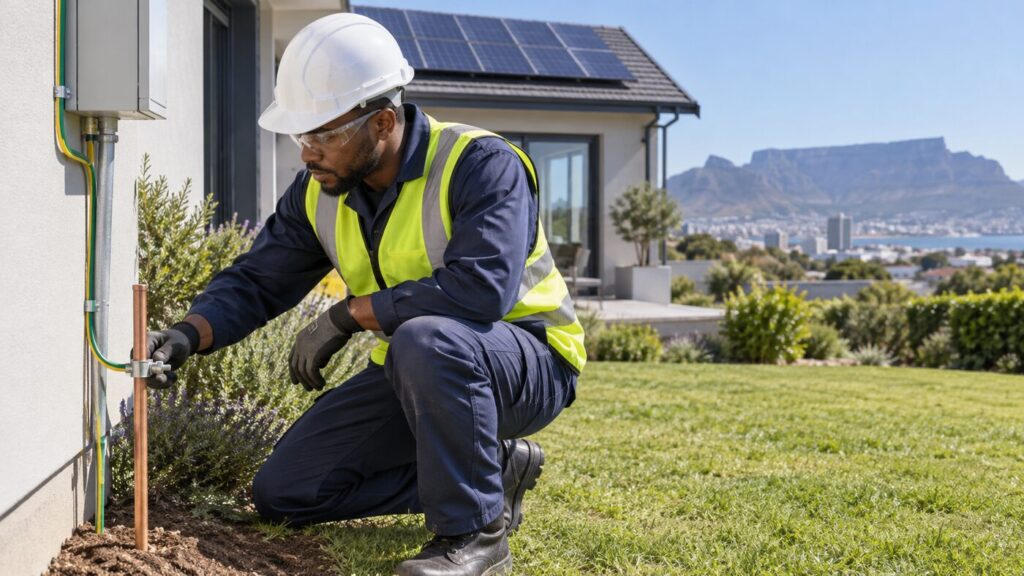
Check whether surge protection devices are present at the main distribution board and whether the installation needs more, including on the solar DC side. Replace corroded clamps, rods, or conductors with suitable materials chosen by the electrician for your site, especially in coastal conditions. Document results and any upgrades. These actions deliver immediate protection and a clear compliance record.
Local registered electricians handle the testing, material selection suited to Cape Town conditions, and certification so lightning protection and earthing work correctly without guesswork or non-compliant DIY changes.
Lightning protection and earthing are two different jobs
Earthing and lightning protection are related, but they are not the same thing. Earthing connects the metal parts of an electrical installation to the ground so that a fault current has a safe path and protective devices can switch the supply off. Lightning protection deals with the risk from lightning strikes and the surges they cause. In South Africa, electrical installations are covered by SANS 10142-1. For lightning protection, an article by the Earthing and Lightning Protection Association (ELPA) points to the SANS 10313 and SANS 62305 standards.
A building can need good earthing without needing a full lightning protection system. Whether your property needs one depends on the building, its use and its surroundings, so it is a question for a qualified person rather than something to guess. Keeping the two ideas apart helps you ask better questions when you get a quote.
How lightning can damage a property
The ELPA article explains that lightning is a dual threat. The first is a direct strike to a structure. The second is the induced voltage that lightning current creates as it passes through conductive paths, which can reach equipment even when the strike is some distance away. That is why electronics, inverters, alarm systems, gate motors and routers are often the first things to fail after a storm.
Surges can also come from the supply network itself, for example during switching or faults. A surge protective device at the main distribution board is one way to reduce the risk to connected equipment, and your electrician can advise which devices suit your installation. Surge protection does not make a building immune, and it works best as part of a properly earthed installation.
Warning signs that your earthing may need attention
Earthing is hidden, so problems often go unnoticed until something goes wrong. Possible warning signs include tingling or mild shocks from taps, appliances or metal fittings, earth leakage units that trip without an obvious reason, equipment that fails after storms, and visible corrosion on earth rods, clamps or conductors. Older properties and buildings that have had extensions may have earthing that no longer matches the installation.
These signs do not prove an earthing fault, because other problems can cause the same symptoms. They are good reasons to ask a qualified electrician to inspect the installation. If you feel a shock from a tap or appliance, stop using it and have it checked before using it again.
What a professional earthing and bonding inspection involves
A qualified electrician will begin by looking at the installation: the main distribution board, the earth connections, bonding of metal pipes and structures where required, and the condition of rods, clamps and conductors. They will use calibrated test equipment to measure what a visual check cannot show, such as earth continuity and the performance of protective devices. A visual check alone cannot show whether an earth connection is good.
The results should be recorded. Ask for a written test report, because it shows what was tested, what was found and what was done about it. If the work involves changes to the installation, a registered person must inspect and test it and issue a certificate of compliance. Under the Electrical Installation Regulations, 2009, only a registered person may issue that certificate.
Solar systems, outdoor metalwork and coastal conditions
Solar panels, their mounting frames and other outdoor metalwork bring extra things to consider. A qualified person should look at how the frames are bonded and earthed and what surge protection suits the system, as part of the design and testing. Do not try to modify earthing on a solar installation yourself.
Coastal air can be hard on metal fittings. Salt and moisture corrode clamps, rods and conductors over time, and a connection that was sound when it was installed can deteriorate. When you ask for earthing work near the coast, ask which materials the electrician proposes and how they resist corrosion, and arrange periodic inspections so that corrosion is caught early.
Choosing an electrician and understanding the paperwork
Only a registered person may issue a certificate of compliance, and no person may do electrical installation work as an electrical contractor unless registered as an electrical contractor. The Department of Employment and Labour has warned the public about fake electrical contractors. Ask to see the registration details of anyone who will work on your installation and keep the certificate of compliance and test report in a safe place.
Ask for a clear quote that explains what will be tested, what may need replacing and what the certificate will cover. Be cautious of anyone who offers to issue a certificate without inspecting and testing the installation. A genuine certificate depends on the inspection and testing having been done.
Planning the work
Earthing and surge protection work is easier to plan when it is not an emergency. A spring inspection gives you time to get quotes, schedule the work and keep the paperwork together. If you are building, renovating or installing solar, raise earthing and surge protection at the design stage rather than after the wiring is finished, because adding them later is often more disruptive.
What to expect on a quote
A sensible quote for earthing or surge protection work should say what the electrician has inspected, what they propose to install or replace, and which standards the work will follow. It should say whether a certificate of compliance will be issued and what the price covers. If the electrician recommends lightning protection for a building, ask them to explain why, based on the building and its surroundings, and to describe what the system will and will not do. Ask for a written scope so that you can compare quotes fairly.
Keep records of the work: the test report, the certificate, photographs of the installation before walls are closed up, and the contact details of the person who did the job. These make later inspections quicker and help the next electrician understand what is in the ground and behind the walls.
Keeping lightning protection and earthing in good order
Lightning protection and earthing are not a one-off purchase. Connections loosen, metal corrodes and buildings change as extensions, solar panels and new equipment are added. Each change can affect how the installation is earthed and protected. Ask your electrician to tell you when the system should next be inspected, and to note it on the test report so that you have a date to work to.
It also helps to know where the main distribution board, the earth connections and any surge protection devices are. After a storm, check whether any protective device has tripped or shows a warning, and tell your electrician about equipment that failed. A pattern of storm damage is useful evidence when deciding whether the installation needs an upgrade.
FAQs
Does Cape Town really need lightning protection and earthing upgrades?
It depends on the building, its use and its surroundings. A qualified person can tell you what earthing and surge protection your installation needs under SANS 10142-1, and whether lightning protection is advisable.
How do I know if my earth resistance is too high?
Only a calibrated test by a qualified person provides the reading; visual inspection alone is insufficient.
Should solar systems have separate lightning protection and earthing?
A qualified person should design the bonding, earthing and surge protection for the whole system, including the frames and the DC side, rather than treating them as separate jobs.
Can coastal humidity affect earthing systems?
Yes, corrosion accelerates; regular checks and appropriate materials are essential.
When is the best time for this work?
Spring’s milder conditions allow safe outdoor testing and upgrades before stronger summer winds.
Related reading
Related reading: Do You Need Lightning Protection? and Earthing and Lightning Arresters.
For the rules behind registered electrical work and certificates of compliance, see the Electrical Installation Regulations, 2009 from the Department of Employment and Labour. A registered electrician should confirm what applies to your property.