
As autumn gives way to the first rains in Cape Town, many homeowners and business owners notice their lights flickering, breakers tripping more often, or that unsettling warm smell near power points. These are classic signs that your electrical distribution board may need attention, especially with the increased moisture and storm activity ahead.
If you have ever wondered about the wiring of a distribution board or felt uncertain about whether your setup can handle the wet Cape Town winter, you are not alone. A properly wired electrical distribution board forms the heart of any safe electrical system. Yet outdated or poorly installed boards remain a common headache across the Southern Suburbs and beyond.
The Real Challenges Cape Town Properties Face
Older homes in areas like Plumstead, Constantia, and Rondebosch often carry electrical wiring installed decades ago. These systems were never designed for modern loads: multiple geysers, pool pumps, office equipment, solar inverters, and a growing collection of appliances. Add the seasonal shift to heavy rains and lightning, and small issues quickly become major risks.
Moisture seeps into conduits and connections. Corrosion weakens terminals. Overloaded circuits push components beyond their limits. Without proper earthing and lightning protection, a single surge can travel through the entire system, damaging sensitive electronics or, worse, starting a fire.
Many property owners only think about their distribution board when something fails. By then, the consequences have already begun.
Why Ignoring Distribution Board Issues Is Costly and Dangerous
Leaving problems unresolved amplifies risks dramatically during the rainy season. Tripping breakers disrupt daily life and business operations. Repeated faults stress appliances, shortening their lifespan and inflating electricity bills. Poor earthing turns lightning strikes or grid surges into direct threats to your property.
In Cape Town’s climate, water and electricity create perfect conditions for earth leakage faults. Damp conditions can cause intermittent tripping that seems random until it escalates. Faulty electrical wiring hidden behind walls may arc silently, generating heat that leads to insulation fires.
Beyond immediate safety, non-compliant installations create legal and insurance complications. A valid Certificate of Compliance requires installations that meet current standards. When storms hit, inadequate lightning protection and earthing leave properties exposed to expensive repairs that could have been prevented.
The good news is that addressing these issues through professional wiring of a distribution board delivers reliable power, enhanced safety, and peace of mind through the wet months ahead.
Understanding Your Electrical Distribution Board
An electrical distribution board, often called a DB board, acts as the central hub where incoming supply is divided into individual circuits for lights, plugs, stoves, geysers, and other loads. It houses the main switch, circuit breakers, earth leakage protection, neutral and earth bars, and sometimes surge protection devices.
In South Africa, installations must comply with SANS 10142-1, the Wiring of Premises standard. This covers everything from cable sizing and routing to proper separation of circuits and correct earthing practices.
A professional electrician assesses your total load, selects the right board size (measured in ways or modules), and ensures future-proofing for additions like solar or electric vehicle chargers.
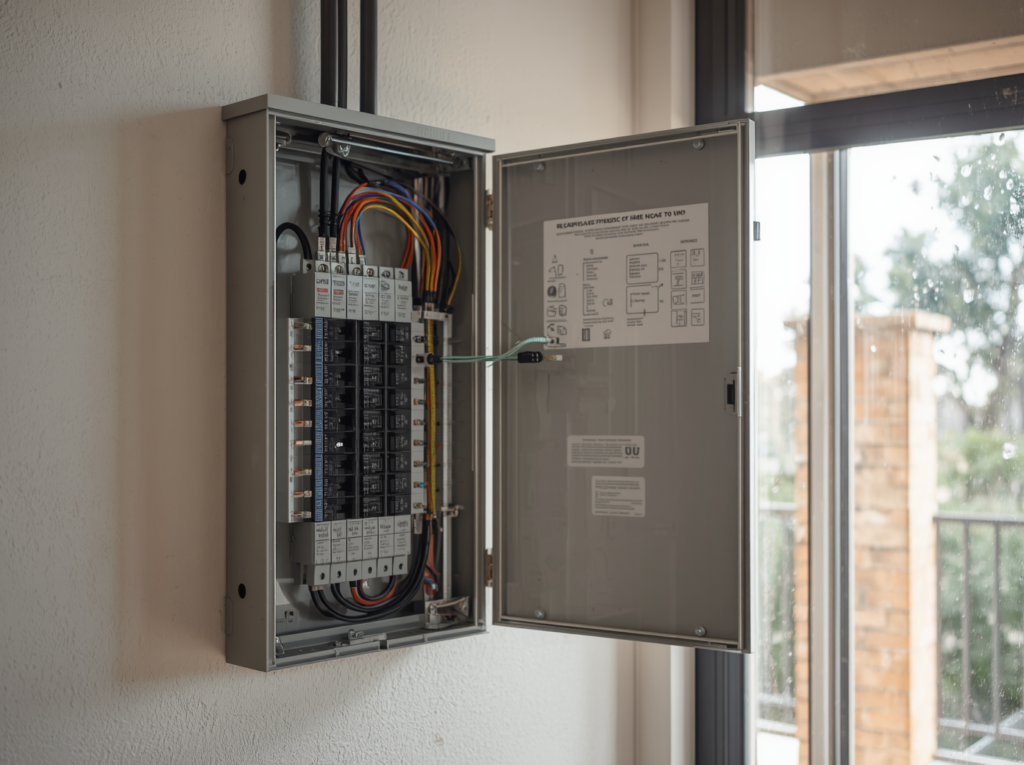
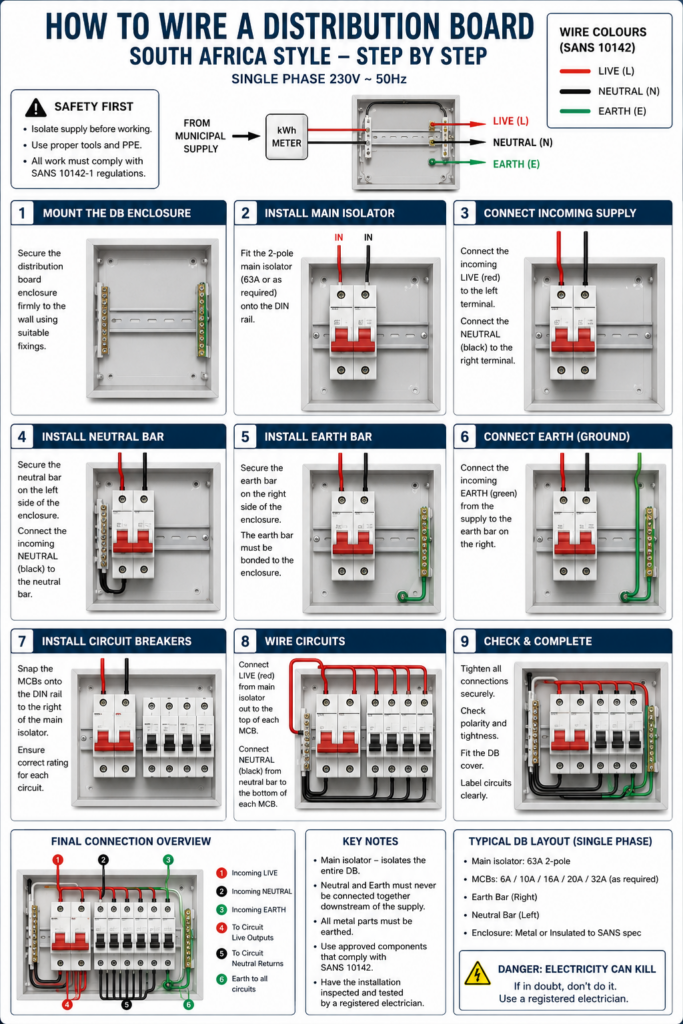
Step-by-Step Guide to Wiring of a Distribution Board
Note: This is educational information only. Wiring of a distribution board must be performed by a registered professional electrician to ensure compliance and safety. Never attempt this work yourself.
Step 1: Planning and Assessment
A qualified electrician begins with a full load calculation. They evaluate existing electrical wiring, measure current demand, and plan circuit separation. Lights and certain plugs may need different protection levels than high-draw appliances. Location matters, the board must be accessible, well-ventilated, and protected from moisture.
Step 2: Choosing the Right Component
Select a board with sufficient ways for current and future circuits. Include an earth leakage relay (typically 30mA sensitivity for residential), appropriately rated circuit breakers, and surge protection. Quality components from reputable suppliers reduce long-term failure risks.
Step 3: Preparing the Installation
Mount the board securely. Route cables neatly through conduits, maintaining proper bending radii. Separate power cables from data or low-voltage wiring to avoid interference.
Step 4: Main Supply Connection
Connect the incoming supply cable to the main isolator or switch-disconnector. Live, neutral, and earth conductors must be correctly terminated with appropriate torque. The earth connects directly to the main earth bar.
Step 5: Installing Protective Devices
Fit the earth leakage unit. Connect the neutral from the main supply through the leakage device where required. Outgoing circuits for sockets and high-risk areas usually route through the earth leakage for protection.
Step 6: Circuit Wiring
Run live conductors from the busbar or appropriate points to individual circuit breakers. Neutrals connect to the designated neutral bar. All earth wires terminate at the earth bar. Proper labeling of every circuit is essential for future maintenance.
Step 7: Integrating Earthing and Lightning Protection
Effective earthing and lightning protection form a critical safety layer. The earth electrode system provides a low-resistance path for fault currents. In Cape Town, where lightning occurs during thunderstorms, bonding the distribution board properly to the lightning protection system helps divert surges safely to ground.
Surge protective devices installed at the main board offer additional defense. These components work together with proper earthing to protect sensitive electronics during storms.
Step 8: Testing and Commissioning
A professional electrician performs insulation resistance tests, earth continuity checks, polarity verification, and earth leakage trip tests. Only after passing these does the board go live, followed by issuance of necessary documentation.
Rainy Season Specific Safety Tips for Cape Town
As we head into the wet months, take these practical steps:
- Schedule a professional inspection of your electrical distribution board before heavy rains intensify.
- Ensure all outdoor electrical points have proper weatherproofing.
- Verify that earthing and lightning protection systems remain intact and properly bonded.
- Consider upgrading surge protection at the main board.
- Keep vegetation trimmed away from overhead lines and lightning conductors.
- Monitor for signs of moisture ingress around the board location.
These measures, combined with correct wiring of a distribution board, significantly reduce weather-related electrical faults.
When to Call a Professional Electrician
Not every electrical issue requires a full board upgrade, but certain warning signs do. Frequent tripping, burning smells, buzzing sounds, warm outlets, or flickering lights all point to potential problems in the distribution board or electrical wiring.
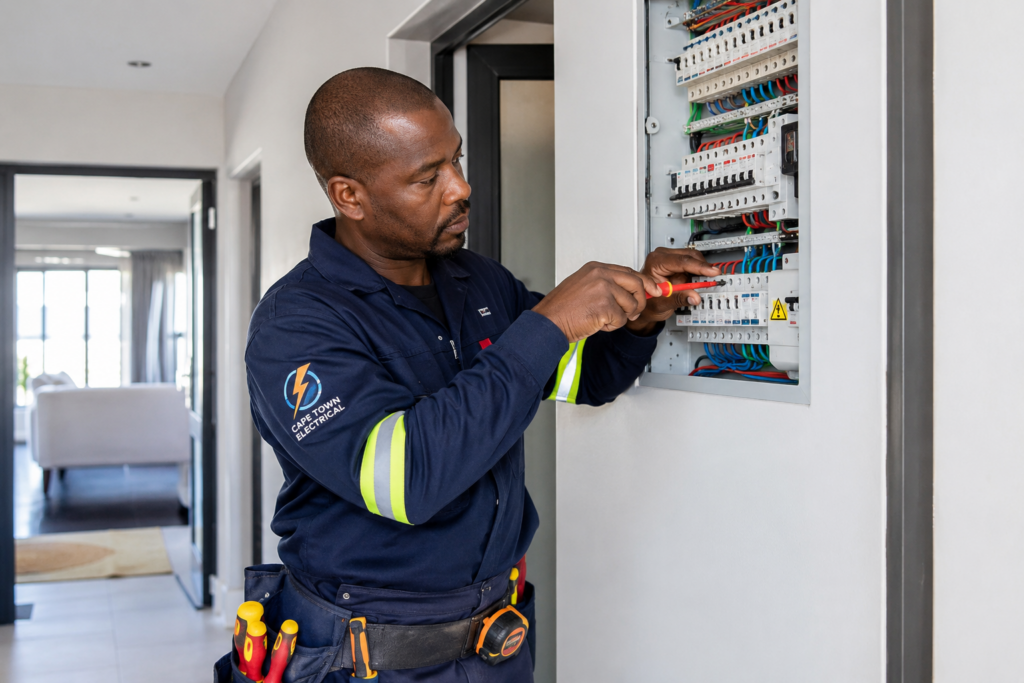
A registered professional electrician brings the right tools, knowledge of local conditions, and commitment to SANS standards. They can diagnose hidden faults, recommend tailored solutions, and perform the work safely.
At Electrogem, our team of qualified electricians in Cape Town regularly helps homeowners and businesses upgrade aging systems, integrate modern protections, and prepare for seasonal challenges. We focus on durable, compliant installations that keep properties safe and efficient year-round.
Benefits of Professional Upgrades
A modern, correctly wired electrical distribution board delivers smoother power delivery, fewer interruptions, better energy efficiency, and enhanced protection for your family or staff. It also increases property value and provides compliance peace of mind.

5 Frequently Asked Questions
1. How often should I have my electrical distribution board inspected in Cape Town?
We recommend inspection at least every two to three years, or annually before the rainy season if your property is older or has undergone renovations. Properties with solar installations or high loads benefit from more frequent checks.
2. What is the difference between earthing and lightning protection?
Earthing provides a safe path for fault currents in everyday operation. Lightning protection and earthing systems work together to handle massive surges from strikes, directing energy into the ground without damaging your installation. Proper integration is essential.
3. Can I add more circuits to an existing distribution board?
It depends on the board’s capacity and condition. A professional electrician assesses whether an upgrade or additional sub-board is needed to maintain safety and compliance.
4. Why do breakers trip more often during rainy weather?
Moisture can create leakage paths to earth, especially in older electrical wiring. This triggers the earth leakage protection. Upgrading seals, wiring, and adding proper surge protection often resolves the issue.
5. How long does professional wiring of a distribution board take?
A typical residential upgrade takes one to two days, depending on complexity. Larger commercial installations require more time for planning and testing. Your electrician provides a clear timeline after assessment.
Preparing your electrical system now means fewer surprises when the Cape Town rains arrive in full force. A well-wired distribution board, combined with robust earthing and lightning protection, forms the foundation of a safe, reliable home or business.
If you are experiencing any of the issues mentioned or simply want peace of mind ahead of the wet season, contact a trusted local professional electrician for a thorough assessment. Taking action today protects your property, your appliances, and everyone who relies on your electrical system.
Discover how professional electricians use specialised electrical fault finding tools to trace hidden intermittent electrical faults – read our recent article here…