
Electrical fault finding is how an electrician traces the cause when spring in Cape Town brings intermittent trips or unexplained behaviour at the electrical distribution board. The specific challenge is hidden faults that moisture and temperature swings expose: residual dampness in outdoor or bathroom circuits after winter rains, corroded terminals inside the board, failing earth-leakage units that nuisance-trip under slight leakage, or overloaded circuits that only show when spring appliance use (fans, pool pumps, garden tools) increases.
Leaving these unresolved risks more than inconvenience. Repeated trips stress appliances and wiring. Undetected arcing or high resistance can generate heat and raise fire potential. Persistent earth leakage indicates a path that could become a shock hazard. Businesses face downtime during spring events or outdoor setups. Insurance and compliance questions can arise if faults worsen.
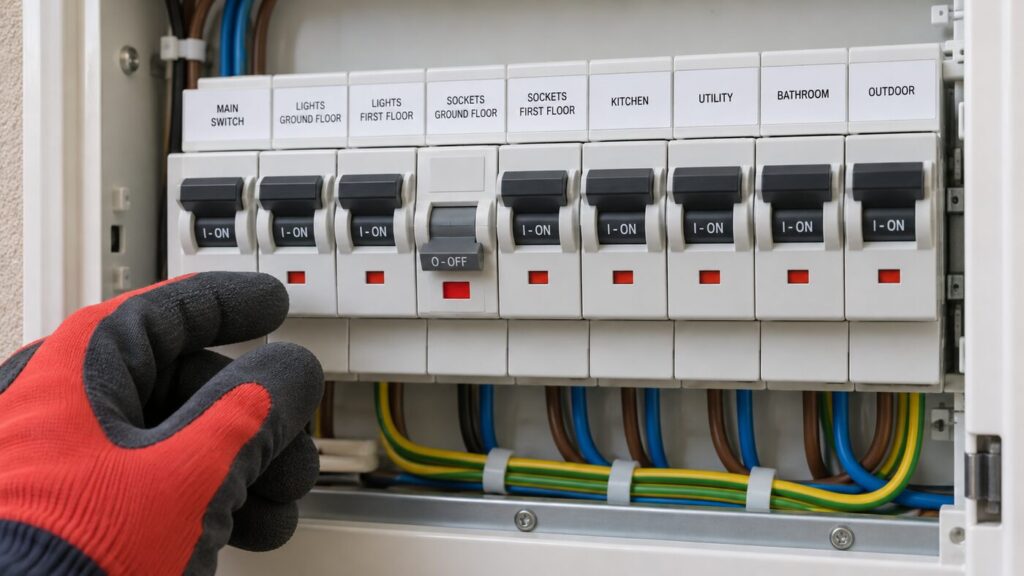
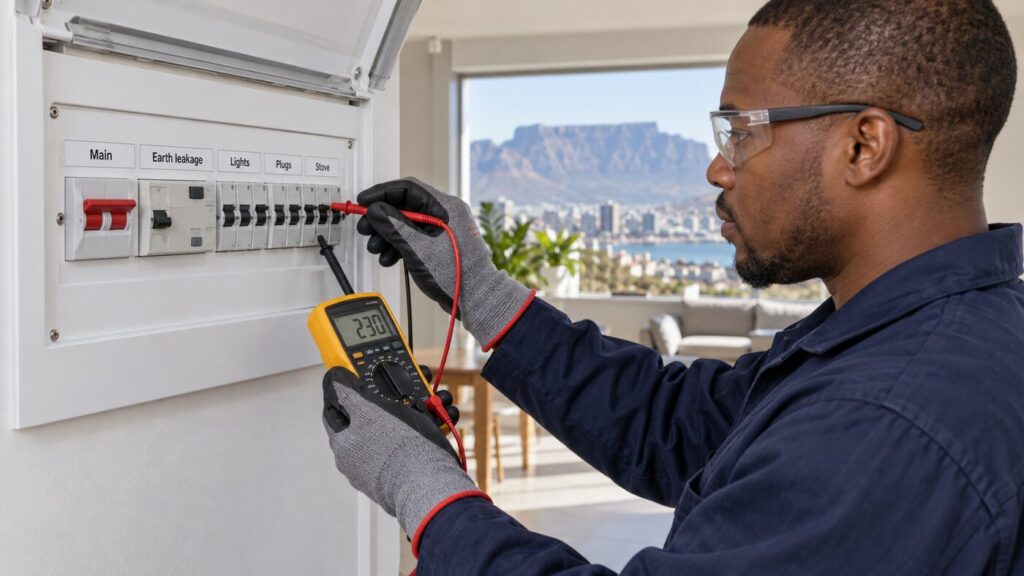
A practical solution framework begins with pattern observation, then professional diagnosis. Note exactly which device trips (individual breaker, earth leakage, or whole board) and under what conditions. Safely isolate suspect appliances. A qualified person then uses insulation resistance testing, continuity checks, and earth-fault loop impedance measurements to locate the source, whether in the electrical distribution board, fixed wiring, or connected equipment. Common spring fixes include sealing outdoor fittings, replacing corroded breakers or terminals, upgrading earth-leakage protection, and redistributing loads or adding circuits. The result is a stable board and documented resolution.
Registered local electricians specialising in electrical fault finding bring the test equipment and SANS 10142-1 knowledge to find the real cause, avoiding repeated DIY resets that mask the problem.
Understanding your distribution board
The distribution board, often called the DB board, is where the electricity supply enters a building and is split into separate circuits for lights, plugs, the geyser, the stove and other loads. The Electrical Contractors Association of South Africa (ECASA) describes it as housing the circuit breakers and the earth leakage unit, and notes that houses may also have smaller boards for outbuildings, pool pumps and gate motors. Everything on the board is there for safety, so a board that behaves oddly deserves attention.
A circuit breaker protects a circuit from too much current. When the current exceeds the breaker’s rating it trips and cuts off that circuit. An earth leakage unit does a different job. ECASA explains that it detects small imbalances between the supply and earth, which indicate leakage of electricity to earth, and switches off automatically. It has a test button that should be used periodically.
What the different trips tell you
Which device trips is the first clue. If a single breaker trips, the circuit it protects may be overloaded or have a fault. If the earth leakage unit trips, current is probably escaping to earth somewhere, which can be through damaged insulation, a faulty appliance or moisture. If the main switch trips, the cause could be anywhere in the installation.
Note what was happening when it tripped. Was it raining? Was a particular appliance in use? Does it happen at a certain time of day? These details help an electrician narrow down the problem quickly. A tripping earth leakage unit that resets and then trips again points to a fault that still exists.
What an owner can safely do
Switching off or unplugging appliances is safe and can help you see whether a particular appliance is the cause. If the board stops tripping after you unplug an item, have that item checked or replaced. Press the test button on the earth leakage unit to confirm it still works, as ECASA recommends doing periodically.
Do not open the board, remove covers, bridge out a tripping device or replace breakers yourself. A device that trips is doing its job, and defeating it removes the protection. The devices in a distribution board are safety equipment, so a wrong replacement can be dangerous and should be left to a qualified electrician.
How electricians trace a fault
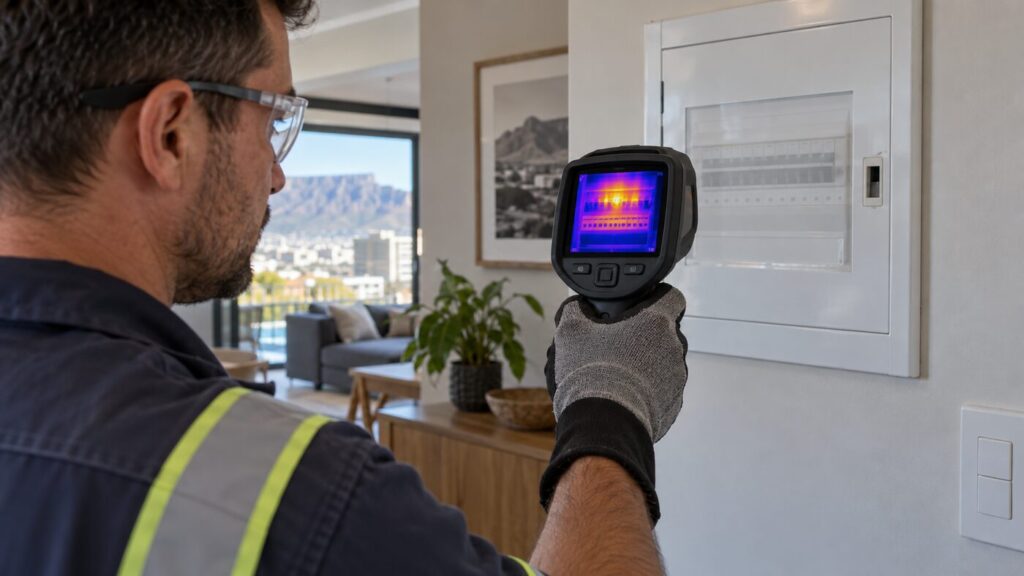
When a residual current device or earth leakage unit trips and will not stay on, an electrician has to find where the leakage is. ECASA describes how insulation testing can help trace a fault, and how in some cases a leakage clamp meter can be used to test circuits without disconnecting everything. Typical steps are to isolate circuits one at a time, test the insulation and continuity of the wiring, check appliances and fittings on the affected circuit, and inspect the board for loose, corroded or overheated connections.
Moisture is a common culprit in outdoor fittings, garden lights, pool equipment and bathroom circuits. Once the electrician finds the cause, the fix might be sealing or replacing a fitting, repairing damaged wiring, replacing a faulty appliance or correcting an overloaded circuit. The electrician should explain what was found and what was done.
Board condition and layout requirements
ECASA’s guide notes that a distribution board must comply with SANS 10142 and be suitable for the conditions where it operates, and that boards should be protected against corrosion. It also says a board must not be mounted in a bathroom, that unused openings should have blanking plates, that circuits should be clearly labelled. If your board is rusty, has missing covers, unlabelled circuits or is in a damp spot, an electrician can advise on repairs or relocation.
Boards that are crowded, hot to touch, buzzing or discoloured need urgent attention. These can be signs of loose connections or overloaded circuits, which can cause overheating.
Certificates and changes to the installation
If an electrician adds circuits or alters the installation, the Electrical Installation Regulations, 2009 say that the user or lessor must obtain a certificate of compliance for at least the addition or alteration. A registered person issues the certificate after inspecting and testing, and only a registered person may issue one. The regulations also say that a user or lessor may not allow a change of ownership if the certificate of compliance is older than two years, which is worth knowing if you plan to sell or rent a property.
Keep your certificate and test reports together. They help any electrician who visits later to understand what has been done, and they are useful if a fault appears.
When to call for help immediately
Call a qualified electrician without delay if a board is hot, smells of burning, shows scorch marks, or buzzes; if you get a shock from an appliance or tap; if water has entered the board; or if breakers keep tripping with no clear cause. If you suspect fire, leave the building and call the emergency services. Do not keep resetting a device that trips repeatedly, because a repeating trip means the fault is still there.
Preparing for an electrician’s visit
You can save time and cost by getting ready. Write down which device trips, when it started, what was running and what the weather was like. Make a list of anything that was recently added, such as new appliances, outdoor lights or a pool pump. Make sure the board is easy to reach and that any labels are legible. Tell the electrician about any previous repairs and have the last certificate of compliance to hand if you have one.
It also helps to ask the electrician to show you what they found and to explain the fix. If the board is old, ask whether it should be upgraded rather than patched. A short written note of the findings and the work done gives you a record if the problem returns.
Why electrical fault finding is worth doing early
Electrical fault finding is easier and cheaper when a fault is new. A leaking fitting caught early may need a seal or a new gland, while the same fault left for months can corrode terminals, damage wiring and trip the earth leakage unit so often that the household stops trusting it. Intermittent trips are annoying, but they are also information. They tell the electrician that something in the installation is changing with moisture, temperature or load.
Treat a tripping device as a warning and not as a nuisance. Resetting it again and again does not fix the cause, and it delays the repair. A short visit to find the fault is usually a better answer than weeks of workarounds.
FAQs
Why does my electrical distribution board trip more in spring?
Residual moisture, corrosion, increased appliance use, and temperature swings commonly create leakage or overload conditions that electrical fault finding identifies.
Can I diagnose the fault myself?
Basic isolation of appliances is safe; opening the board or performing electrical tests requires a qualified professional.
What tools are used in electrical fault finding?
Insulation testers, continuity meters, loop impedance testers, and thermal cameras are typical for locating hidden issues in the electrical distribution board and circuits.
How long does professional fault finding usually take?
It depends on how easy the fault is to reproduce and how many circuits are involved. Ask the electrician for an estimate after the first inspection.
Will fixing the electrical distribution board prevent future spring issues?
Correct diagnosis plus appropriate sealing, upgrades, and load management reduces the chance of the same fault returning, although a new fault elsewhere is still possible.
Related reading
Related reading: How Professional Electricians Find Intermittent Electrical Faults and 5 Warning Signs Your Electrical Distribution Board Needs Attention.
For the rules behind registered electrical work and certificates of compliance, see the Electrical Installation Regulations, 2009 from the Department of Employment and Labour. A registered electrician should confirm what applies to your property.